

A frittata is less a single recipe than a method: whisked eggs and milk as the base, and whatever vegetables, cheese, or herbs you have on hand folded in. It’s an Italian-style open-faced omelet, cooked in a skillet and finished in the oven, which means no careful folding and no standing over the stove worrying about the outside overcooking before the inside sets.
Below is the base recipe plus five tested variations — broccoli and feta, roasted red pepper and spinach, spring veggie, mushroom and tarragon, and a Caprese version with tomato and mozzarella. For more ideas beyond these, the Olive Magazine frittata roundup is worth a look.
What you’ll need

The base is just eggs, a splash of milk, garlic, salt, pepper, and olive oil for the pan — whisk it together and set it aside while you prep whichever vegetables you’re using. You only need a 10-inch cast iron or other oven-safe skillet; nothing else special required. Eggs themselves are worth the staple status — Harvard’s egg guide covers why.
Five variations
1. Broccoli and feta — scallions, chopped broccoli, a pinch of smoked paprika, and crumbled feta. Sauté the scallions and broccoli with salt and pepper for 5–8 minutes until tender and bright green, stir in the paprika, pour over the egg mixture, top with feta, and bake.
2. Roasted red pepper and spinach — shallot, roasted red peppers, fresh spinach, and feta. Cook the shallot until translucent, add the peppers and spinach until the spinach wilts, pour in the eggs, top with feta, and bake.
3. Spring veggie — scallions, asparagus, peas, mini mozzarella, feta, and tarragon or chives. Sauté the scallions and asparagus, add the peas, pour in the eggs, and top with the cheeses and herbs before baking.
4. Mushroom and tarragon — shallot, mixed mushrooms, tarragon, and grated Pecorino. Cook the shallot briefly, then the mushrooms until browned (about 8 minutes), stir in the tarragon, pour in the eggs, top with Pecorino, and bake.
5. Caprese — shallot, cherry tomatoes, mini mozzarella, and fresh basil. Cook the shallot, add the tomatoes and half the basil, pour in the eggs, top with mozzarella, bake, and finish with the rest of the basil once it’s out of the oven.
Each one serves 3–4 people and bakes at 400°F for 15–20 minutes, until just set.
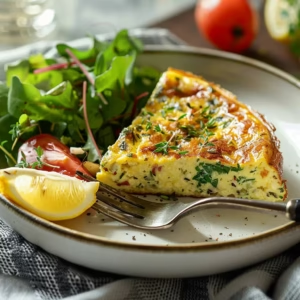
Easy Frittata (5 Variations)

Ingredients
Frittata Base
- 6 large eggs
- 1/4 cup unsweetened almond milk or any milk
- 2 cloves garlic minced
- 1/4 tsp sea salt
- freshly ground black pepper
- extra virgin olive oil for the skillet
Variation 1: Broccoli Feta
- 6 scallions chopped
- 2 cups broccoli chopped
- 1/8 tsp smoked paprika
- 1/4 cup crumbled feta cheese
Variation 2: Roasted Red Pepper & Spinach
- 1 shallot chopped
- 2 roasted red bell peppers chopped
- 2 cups spinach
- 1/3 cup crumbled feta cheese
Variation 3: Spring Veggie
- 4 scallions chopped
- 1/2 cup asparagus chopped
- 1/2 cup frozen peas thawed
- 1/2 cup mini mozzarella balls halved
- 1/4 cup crumbled feta cheese
- 1/4 cup tarragon or chives chopped
Variation 4: Mushroom & Tarragon
- 1 shallot chopped
- 12 oz mixed mushrooms chopped
- 1/4 cup tarragon chopped
- 1/3 cup grated pecorino cheese
Variation 5: Caprese
- 1 shallot chopped
- 2 cups cherry tomatoes halved
- 3/4 cup mini mozzarella balls halved
- 1/2 cup fresh basil leaves sliced
Instructions
- Preheat the oven to 400°F (200°C).
- Whisk the eggs, milk, garlic, salt and pepper in a bowl.
- Choose a variation. Heat a little olive oil in a 10-inch oven-safe skillet and cook the vegetables until softened.
- Pour the egg mixture over the vegetables and top with the cheese or herbs for your variation.
- Transfer the skillet to the oven and bake for 15 to 20 minutes, until the eggs are set.
- Season to taste, slice and serve.
Notes
- A cast iron skillet gives the best results.
- Swap the cheeses to suit your taste.
- Every variation makes great leftovers for the next day.
A few things that make a real difference
- A well-seasoned cast iron skillet helps the eggs cook evenly and makes slicing easier afterward.
- Sauté the vegetables before adding the eggs — this is really the whole secret to avoiding a watery frittata, especially with high-moisture vegetables like spinach or mushrooms.
- Whisk the eggs thoroughly to work in some air; it makes for a noticeably lighter, fluffier result.
- Pull it from the oven once the center is just set — overbaking is the most common way to lose the tender texture.
- Let it rest about 5 minutes before slicing so it firms up and cuts cleanly.

Storing it
Cooled slices keep in an airtight container in the fridge for up to 4 days. Reheat gently — a skillet over medium-low heat, or the microwave at half power, keeps the eggs from turning rubbery. To freeze, cut into squares, wrap in parchment, and store in a freezer bag for up to 2 months; reheat from frozen in the oven or a toaster oven.
Questions I get about this one
What actually separates a frittata from an omelet?
An omelet is cooked on the stovetop and folded around the filling; a frittata has the filling mixed right into the eggs and finishes in the oven, so there’s no folding involved.
Can I bake it instead of finishing on the stovetop?
Yes — that’s actually the standard method here. Preheat to 400°F and bake 15–20 minutes for even cooking with no risk of a burnt bottom.
How do I keep it from turning watery?
Always sauté the vegetables first, especially high-moisture ones like spinach or mushrooms, and make sure anything like cooked zucchini or thawed frozen spinach is well drained.
Do I need milk in it?
A small amount helps — about a quarter cup for 6 eggs keeps things tender without compromising structure.
It’s a genuinely practical dish: a way to use up vegetables before they spoil, a 30-minute answer when you’re low on dinner ideas, and leftovers that reheat well enough to double as next-day lunch. Pair it with a simple green salad, some crusty bread, or roasted potatoes for a full dinner plate.