
My mother-in-law, Fatima, taught me this one standing at her stove in Fes, correcting my knife angle on the eggplant without even looking up from her own pan. “Bigger pieces,” she said. “You want to bite into it, not lose it in the sauce.” That single piece of advice is still the reason this curry works: thick-cut eggplant that browns first and holds its shape, rather than the thin, sauce-dissolving slices most recipes call for.
What you end up with is a dinner that looks slow but takes about 40 minutes start to finish: eggplant seared until the edges caramelize, simmered in a coconut-tomato sauce warmed through with cumin, coriander, turmeric and a pinch of cinnamon, then finished with roasted cashews for crunch and a squeeze of lime to cut the richness. It’s vegan, naturally gluten-free, and reheats better the next day than it is the first — which makes it one of the few curries I’ll deliberately cook ahead.
The one step people skip (and shouldn’t)
Most eggplant curry recipes go straight from raw cubes into the simmering sauce. Skip that and you get a curry where the eggplant has dissolved into mush by the time everything else is cooked through — texturally, it’s the single biggest difference between a forgettable version and this one.
Browning the eggplant separately first, either in a hot skillet or roasted at high heat, does two things: it drives off excess moisture so the eggplant holds structure in the sauce, and it builds a layer of caramelized flavor that plain simmering never gives you. It’s an extra five minutes of hands-on time for a completely different result.
What you’ll need
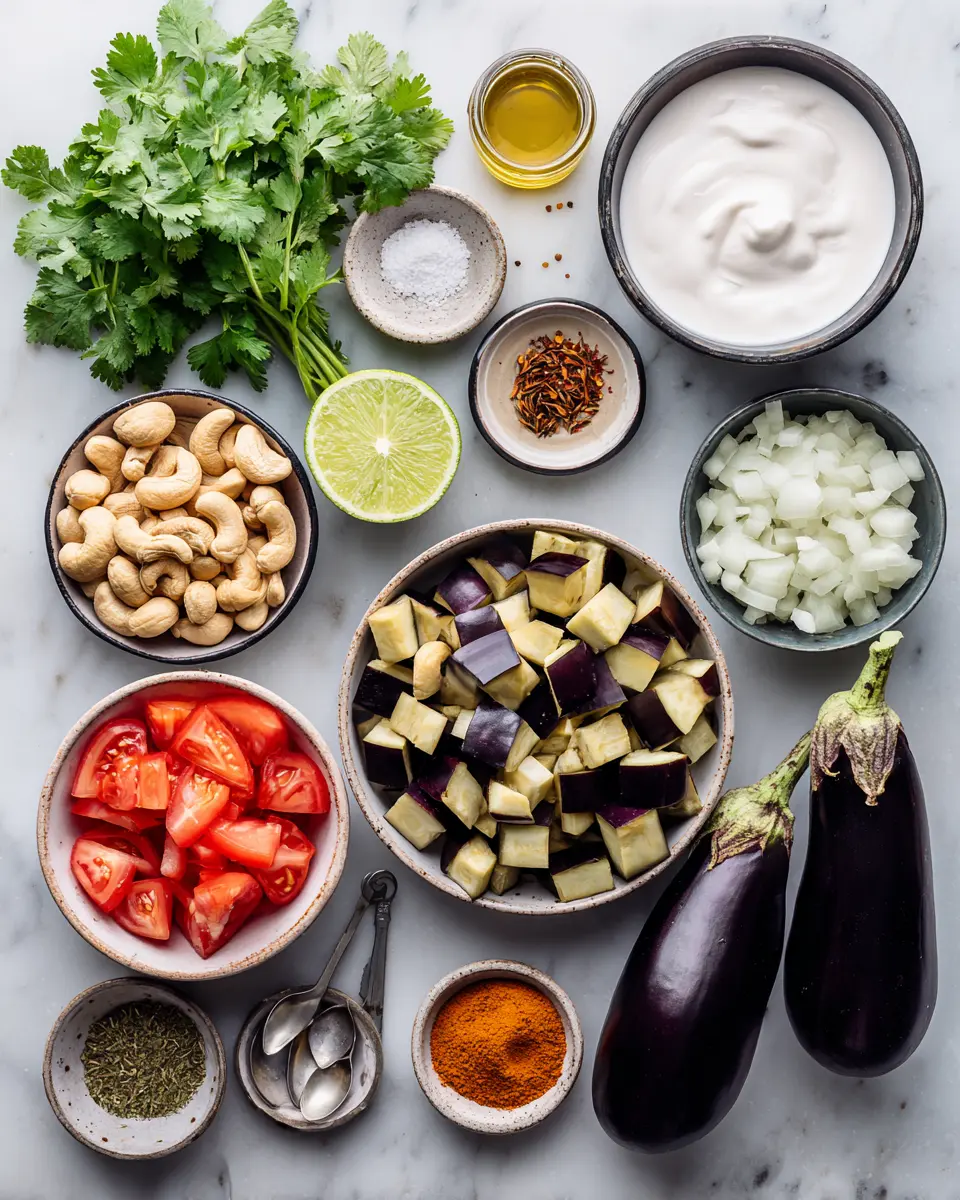
For the curry:
- 2 medium eggplants (about 700–800 g), cut into 2–3 cm chunks — bigger than you think, see above
- 1 tbsp olive or vegetable oil, plus more as needed
- 1 medium onion, finely chopped
- 3 cloves garlic, minced
- 2.5 cm piece ginger, minced (about 1 tbsp)
- 2 tomatoes, chopped (or 1 cup canned chopped tomatoes)
- 1 tsp ground cumin
- 1 tsp ground coriander
- 1/2 tsp turmeric powder
- 1/2 tsp chili powder (optional)
- 1/2 tsp ground cinnamon
- 1 can (400 ml) full-fat coconut milk
- 1/2 cup roasted cashews (optional, but worth it for the crunch)
- 1/2–3/4 tsp fine salt, or to taste
- Black pepper, to taste
For garnish: fresh cilantro, lime wedges.
A note on the eggplant itself: smaller, firmer ones with glossy skin tend to be less bitter than the big globe varieties. If yours are older or oversized, salt the cut cubes for 20–30 minutes and pat dry before cooking — it pulls out excess moisture and any lingering bitterness.
How I make it
Brown the eggplant. Heat 1 tbsp oil in a large skillet over medium heat. Add the eggplant with a pinch of salt and sauté 8–10 minutes, stirring occasionally, until golden and just tender — work in two batches if your pan is crowded, since crowding steams the eggplant instead of browning it. Set aside.
Hands-off version: toss the cubes with 1–2 tbsp oil and roast on a lined tray at 220°C (430°F) for 18–22 minutes, flipping once.
Build the base. In the same pan, add a little more oil if needed and cook the onion 4–5 minutes until translucent. Add garlic and ginger, stir for about a minute until fragrant — don’t let the garlic brown or it turns bitter.
Bloom the spices. Add the cumin, coriander, turmeric, chili powder and cinnamon and stir for 30 seconds in the hot oil before the tomatoes go in. This is where the aroma actually develops; skipping it is the difference between a curry that smells like something and one that just tastes vaguely spiced. Add the tomatoes and cook 3–4 minutes until they break down into a chunky sauce.
Simmer. Pour in the coconut milk, return the eggplant to the pan along with any juices, and simmer gently 10–15 minutes until the sauce thickens slightly and the eggplant turns silky. Season with salt and pepper.
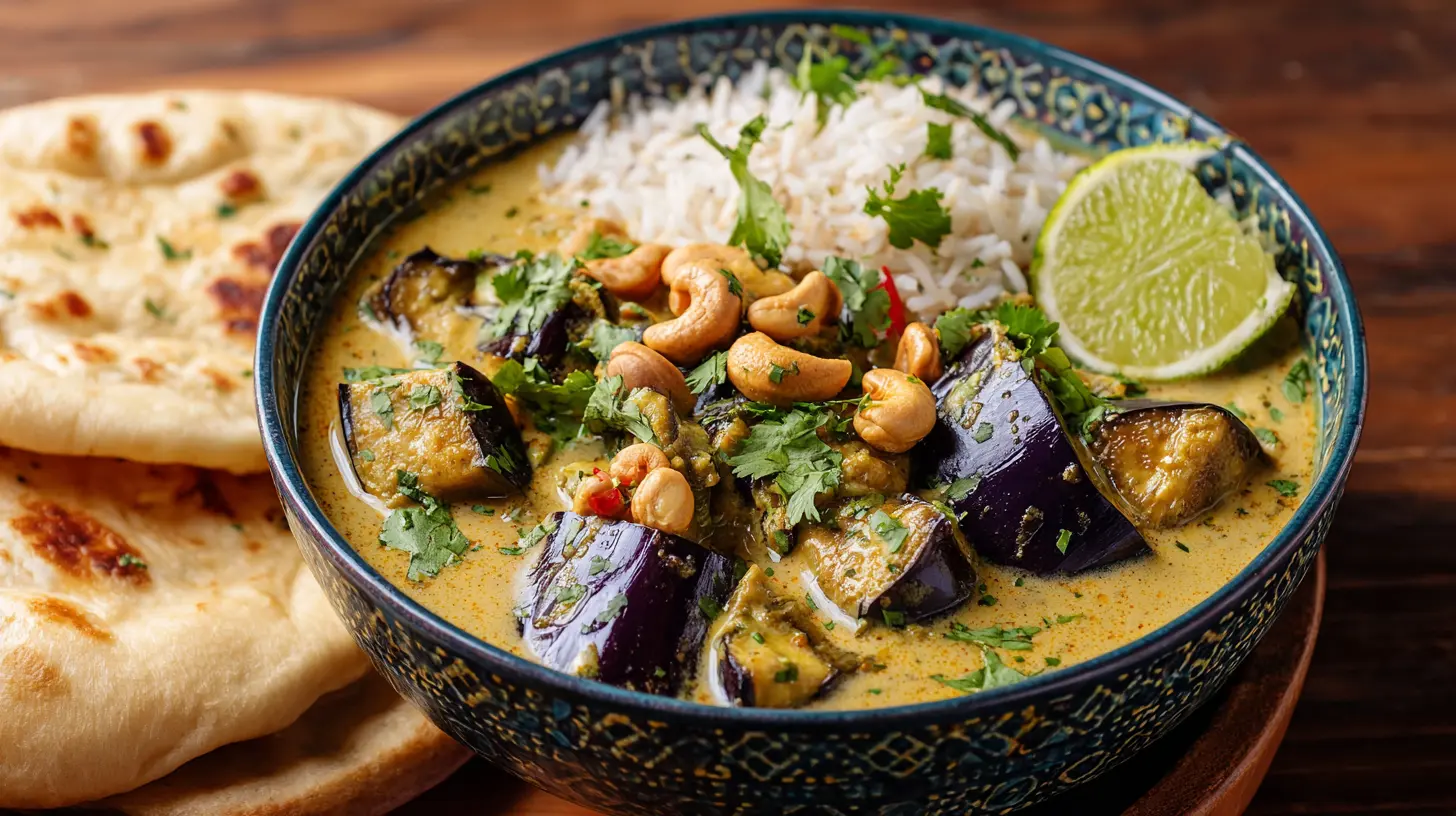
Finish. Stir in the cashews (or scatter them on top for more crunch), pile on the cilantro, and serve hot with basmati rice, naan, or both, with lime wedges on the side.
Creamy Eggplant Curry

Ingredients
- 2 medium eggplants 700 to 800 g, cut into 2 to 3 cm chunks
- 1 tbsp olive or vegetable oil plus more as needed
- 1 medium onion finely chopped
- 3 cloves garlic minced
- 1 tbsp fresh ginger minced
- 2 tomatoes chopped, or 1 cup canned
- 1 tsp ground cumin
- 1 tsp ground coriander
- 1/2 tsp turmeric
- 1/2 tsp chili powder optional
- 1/2 tsp ground cinnamon
- 400 ml coconut milk 1 can, full fat
- 1/2 cup roasted cashews optional
- 1/2-3/4 tsp fine salt to taste
- black pepper to taste
- fresh cilantro and lime wedges to serve
Instructions
- Heat the oil in a large skillet over medium heat. Sauté the eggplant with a pinch of salt for 8 to 10 minutes until golden and just tender, in batches if needed. Set aside. (Or roast at 430°F / 220°C for 18 to 22 minutes.)
- In the same pan, cook the onion 4 to 5 minutes until translucent. Add the garlic and ginger for 45 to 60 seconds.
- Stir in the cumin, coriander, turmeric, chili powder and cinnamon for 30 seconds. Add the tomatoes and cook 3 to 4 minutes until softened.
- Pour in the coconut milk, return the eggplant and simmer gently 10 to 15 minutes until thickened. Season with salt and pepper.
- Stir in or top with the cashews, garnish with cilantro and serve with basmati rice or naan and lime wedges.
Notes
- Keeps 4 days in the fridge or 2 months in the freezer. Reheat gently with a splash of water or coconut milk.
- Add chickpeas or tofu during the simmer for extra protein.
- For large eggplants, salt the cubes for 20 to 30 minutes and pat dry before cooking.
If you want to change it up
This sauce is forgiving. A can of drained chickpeas or cubed firm tofu stirred in during the simmer adds protein without changing the method. Swap in cauliflower florets, green beans or a few handfuls of spinach in the last 5–8 minutes if you want more vegetables in the bowl. No cashews on hand, or avoiding nuts? Toasted pumpkin seeds give you the same crunch. Fresh tomatoes out of season — a tablespoon of tomato paste thinned with a splash of water works just as well.
If the sauce ends up thinner than you’d like, simmer it uncovered a few extra minutes, or stir in a spoonful of cashew butter instead of reaching for flour. Too thick after reheating? A splash of hot water or broth loosens it right back up.
Serving it

Basmati rice is the classic pairing since it absorbs the sauce without turning gluey. Warm naan or roti works just as well if you’d rather scoop than spoon. On the side, a simple cucumber raita (skip it for a vegan version, or use coconut yogurt) cools things down, and a squeeze of extra lime at the table lets everyone adjust the brightness themselves.
Keeping leftovers
This curry is genuinely better on day two — the spices settle in overnight. Refrigerate in an airtight container up to 4 days, or freeze up to 2 months (the sauce may separate slightly on thawing; a good stir while reheating brings it back together). Reheat gently on the stovetop with a splash of water or coconut milk, or in the microwave in short bursts, stirring between each. Leftovers make a great saucy filling for a wrap, or spoon them over a baked sweet potato.
Questions I get about this one
No coconut milk in the house? Unsweetened almond milk with a couple tablespoons of cashew butter stirred in gets you a similar body, though you’ll want to simmer a bit longer to thicken.
Eggplant turned to mush on you before? That’s almost always either the pieces being cut too small, or going straight into the sauce without browning first. Both are addressed above — cut it bigger, brown it first.
Is it actually spicy? Not as written. The chili powder is optional and the only heat source, so add fresh chilies if you want more kick, or leave it out entirely for a very mild curry that’s fine for kids.
Can this go oil-free? Dry-sweat the onion in a splash of water instead of oil, then stir the spices into a little of the coconut milk before adding the rest. Roast the eggplant on parchment without oil — it won’t caramelize quite as deeply, but it still works.
One of these eggplants a week got us through most of last winter. If you make it, I’d love to see what you served it with — tag your version or leave a note in the comments below.